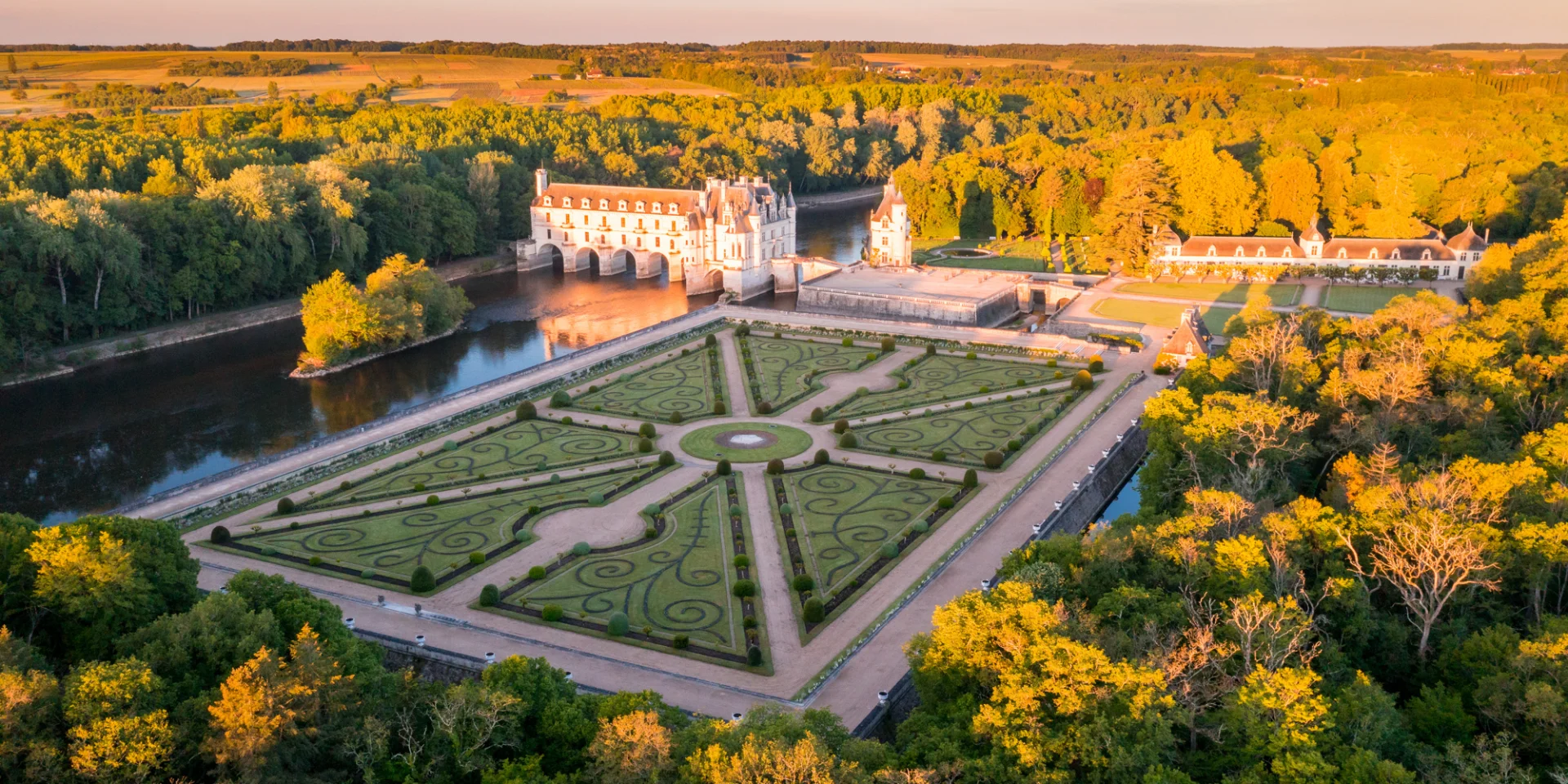
Chateau De Chenonceau Credit Adt Touraine Loic Lagarde 2031 3Vue aérienne du Château de Chenonceau
©Vue aérienne du Château de Chenonceau|ADT Touraine - Loïc Lagarde

Catherine de Medici and the Château de Chenonceau

Immerse yourself in the fascinating history of Catherine de Médicis at Chenonceau Castle, where the queen left her indelible mark on the most majestic of the Loire châteaux. Discover the unique gallery spanning the Cher, the refined gardens and the Florentine influence that make the Château des Dames a jewel of the Renaissance.

Catherine de Medici A queen with an exceptional destiny

“I got the girl naked! So lamented Francis I when Pope Paul III refused to pay the dowry promised by his predecessor Clement VII for the marriage between Catherine de Medici and Francis I’s second son, Henry of Orleans(the future Henry II).

From Florence to the French court

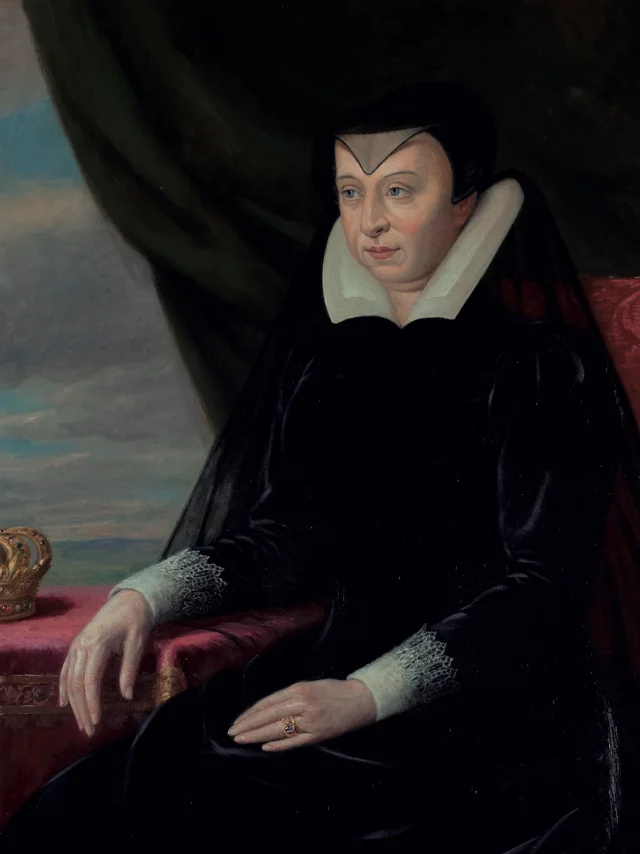
Heiress to the Medici lineage, in control of Florence, Catherine was a strategic choice for Franco-Italian rapprochement in the context of the Italian wars and the rivalries between Francis I and Charles V. Her commoner (non-noble) origin did not predestine her to the future King of France, the first son of Francis I. She married the second son, becoming Duchess of Orléans in 1533. Three years later, there was a new twist: the dauphin François de France died! Henri d’Orléans was given the title of Dauphin and Duke of Brittany, before becoming King of France in 1547. Catherine de Médicis was crowned Queen of France in 1549 at the Basilica of Saint-Denis.
Chaumont, then Chenonceau!

Alongside her active role in the life of the Court (political, but also cultural, notably alongside Marguerite de Navarre) and the birth of her children (François II, Elizabeth de France, Claude de France, Louis de France, but also Charles IX, Henri III, Marguerite de France…), Queen Catherine also administered the rich estate of Chaumont-sur-Loire from 1550.

When the King died, she exchanged it for the Château de Chenonceau, at the expense of her great rival, Diane de Poitiers.

Rivalry with Diane de Poitiers

A game of power is being played out at the Château de Chenonceau between two exceptional women. On one side, Catherine de Médicis, the rightful queen. On the other, Diane de Poitiers, the king’s favourite. The latter received the Château de Chenonceau as a gift from Henry II and created her famous garden there, while Catherine had to wait in the shadows.

On the king’s sudden death in 1559, Catherine regained her rights to Chenonceau, forcing Diane to exchange the château for the Chaumont-sur-Loire estate. The queen mother then marked her territory by creating her own garden opposite that of her former rival, as a final thumbing of her nose at the woman who had reigned over the king’s heart for so long.

Visiting the château today

The gallery and the royal flats

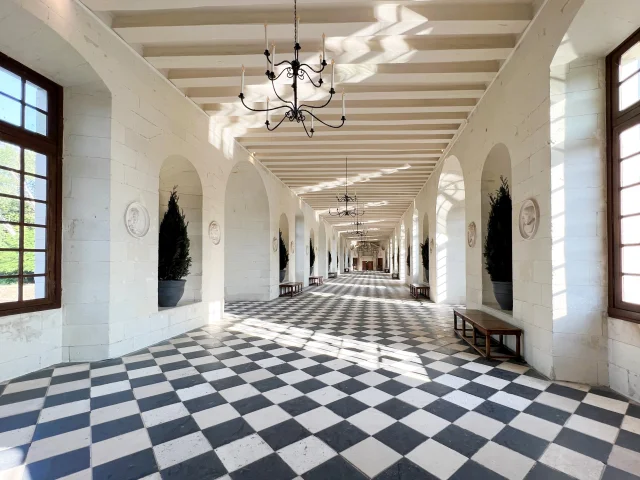
Push open the doors of the majestic gallery, a true architectural feat where every step echoes on the black and white checkerboard. The mullioned windows reveal breathtaking views of the Cher, which flows peacefully beneath your feet. In the royal flats, Louise de Lorraine’s bedroom features delicately carved woodwork and an original coffered ceiling. The Cabinet Vert transports you into the intimacy of power, where Katherine Briçonnet once orchestrated the life of the château. Don’t miss the library, where Jean-Jacques Rousseau stayed as a guest of Claude Dupin in the 18th century.

Gardens through the seasons

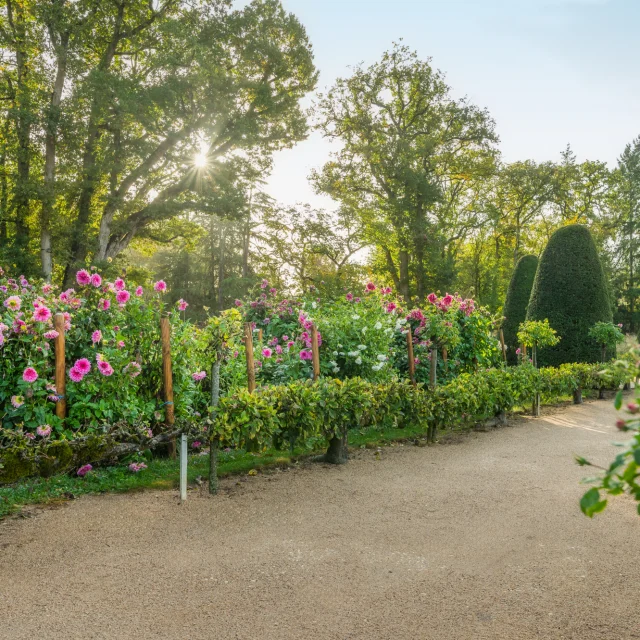
From the very first days of spring, daffodils and tulips burst through the still-cold earth, heralding nature’s awakening. In summer, the flowerbeds light up with a floral symphony of old roses and multicoloured perennials.

In autumn, the blushing foliage of the Virginia creeper lights up the tufa stone walls, while chrysanthemums and dahlias prolong the magic of the blooms. Even in winter, the garden retains its splendour thanks to the pruned boxwood and century-old yew trees that create elegant perspectives in the morning mist. As the seasons change, the gardens of Chenonceau take on a thousand colours!

Night-time events and tours

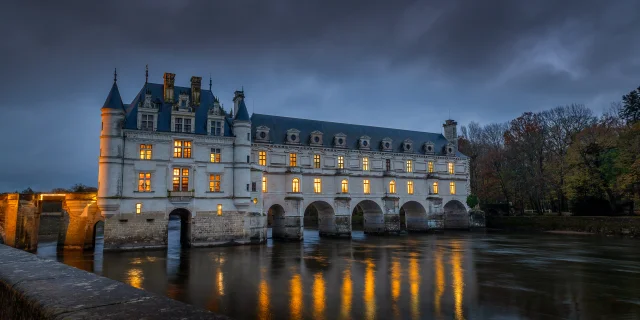
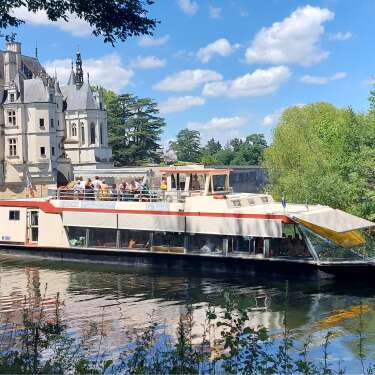
For a few evenings in summer, come at dusk for an enchanting experience in the castle’s illuminated gardens. The music of the great Italian composers of the Renaissance will accompany your steps along the glittering flowerbeds. The gallery overlooking the Cher is transformed into a jewel case of light, its reflections dancing on the peaceful waters.

In mid-July, a wine tasting under the stars attracts many visitors who come to discover the Touraine Chenonceaux appellation during an exceptional evening! Other evenings are organised for wine tastings from the Dômes cellar.

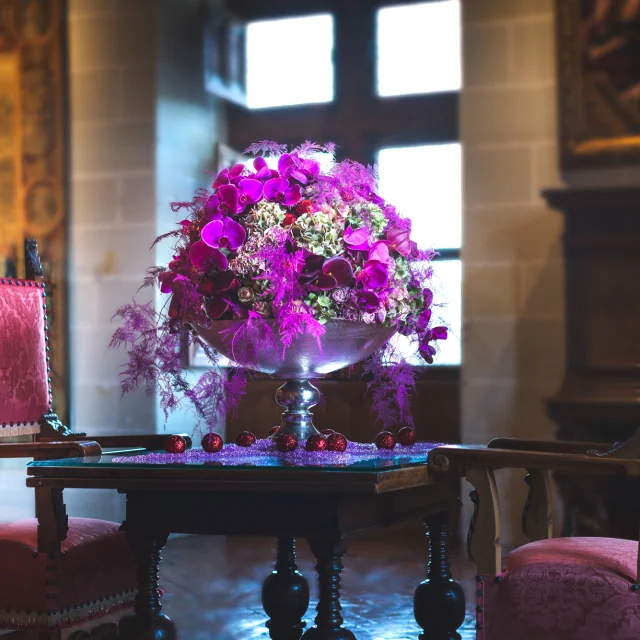
During the festive season, an exceptional night-time opening gives you the chance to discover the enchantment of Christmas decorations in the land of castles, enhanced by carefully studied lighting that highlights every architectural detail.

Catherine's architectural legacy

The construction of the gallery over the Cher

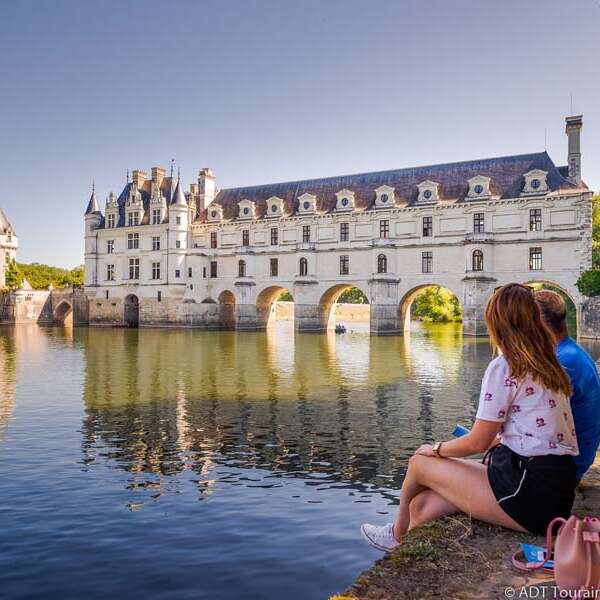
Behold the majestic double-decker gallery spanning the Cher, an architectural masterpiece by Philibert Delorme. At 60 metres long and 6 metres wide, this unique feat of engineering houses a splendid ballroom lit by 18 windows.
Built in 1576 on the bridge built by Diane de Poitiers, Catherine de Médicis’ gallery boasts a floor paved with a black and white checkerboard of tufa and slate, reminiscent of the Florentine palaces of her childhood. The exposed ceiling joists bear witness to the refinement of the period.
This monumental gallery soon became the setting for sumptuous royal festivities, where the Queen Mother asserted her political power at the height of the Wars of Religion, including the famous “Bare Breasts Ball” in 1577.

The interior of the château

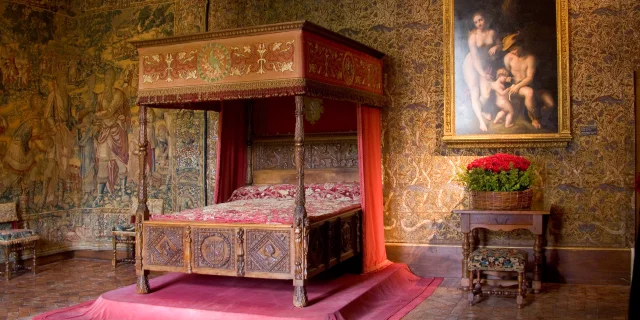
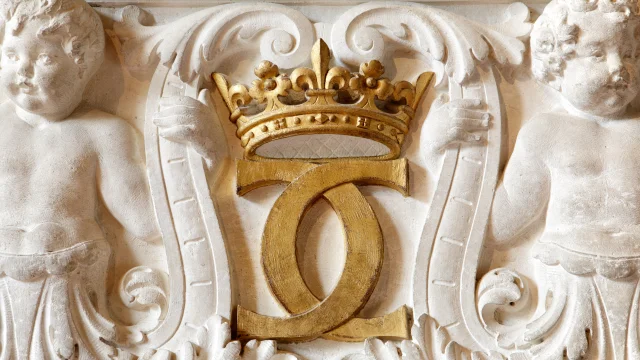
Cross the threshold into the royal flats, where the refinement of the House of Valois is expressed in every detail. The Queen Mother’s bedroom is majestically decorated with carved woodwork and Flanders tapestries. In her private study, the coffered ceiling proudly displays the intertwined initials of Henry II and Catherine, while the period furniture bears witness to the luxury of the court.

Stop off in the bookshop, where Catherine had a library of precious manuscripts set up. Further down, the kitchens, veritable culinary cathedrals, reveal the importance of good food at the Valois court. In the outbuildings, you can also discover the reconstructed apothecary’s shop, the kingdom of remedies and perfumes so dear to the sovereign.

The Queen’s study

Enter the intimacy of the Green Cabinet, the nerve centre of royal power. It was from this room that Catherine de Médicis ruled France during her regency. Note herintertwined initials, two “Cs”, on the ceiling. A magnificent 15th-century Brussels tapestry adorns the walls, while the window offers a strategic view of the Cher.

In this personal refuge, the Queen Mother received her advisors and wrote her diplomatic correspondence. Period documents tell us that Nostradamus himself was received in this study forastrology sessions, a secret passion of the sovereign.

Catherine’s garden opposite Diana’s

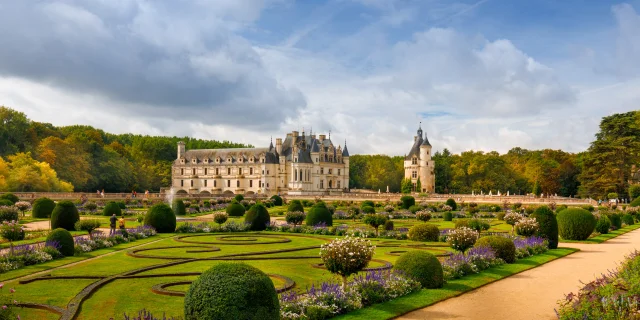
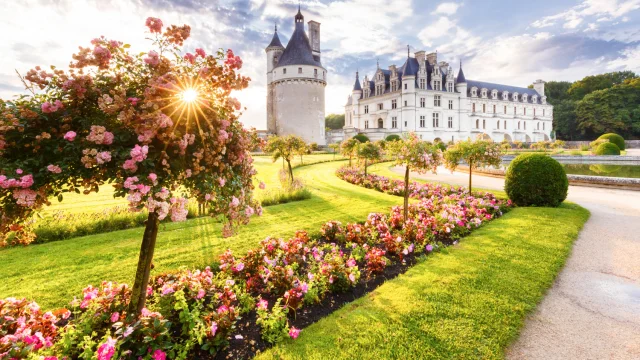
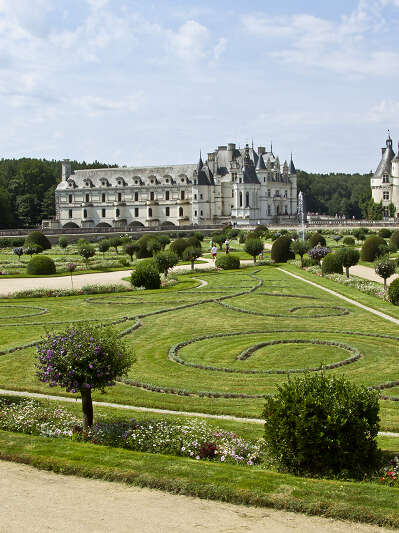
Opposite her rival’s parterre, Catherine created a more intimate but equally refined garden. You’ll love its perfect geometric structure, its symmetrical paths lined with santoline and its elegant central pool. Let yourself be charmed by the subtle dialogue between the two gardens, where every detail reveals the personality of its creator.

Smaller but exquisite, Catherine’s garden offers an incomparable view of the west facade of the château. Its carefully composed beds are now home to more than 11,000 plants, which are renewed twice a year, perpetuating the floral tradition initiated by the Queen Mother. A show that changes with the seasons, from delicate roses to colourful perennials.

Rare plants and the Florentine influence

Stroll through the alleys where the botanical treasures brought back from Tuscany by Catherine de Médicis flourish. Here, the Queen acclimatised species unknown in France: artichokes, fragrant basil and other aromatic herbs that transformed the gardens of Chenonceau into a veritable experimental garden.

In her trial kitchen garden, the sovereign also grew mulberry trees for rearing silkworms, thus perpetuating the Florentine tradition of sericulture. The aviaries are home to rare birds, while the flowerbeds are adorned with medicinal plants for her apothecary. This living heritage is perpetuated today by the estate’s unique collection of Renaissance plants.

The art of French parterres

Discover the major innovation of Catherine de Médicis: her geometric parterres inspired by Tuscan villas. On the advice of Bernard Palissy, the Queen designed a garden in which each bed became a living work of art. Pruned boxwoods formed elegant arabesques, while the pathways were adorned with coloured sand reminiscent of Florentine mosaics.

The Queen had raised terraces laid out so that these plant tableaux could be admired from the windows of the château. A technical feat for its time: complex hydraulic systems fed fountains and water jets, creating an aquatic symphony that was unique in the Loire Valley. These innovations had a lasting impact on the art of French gardens.

Court life at Chenonceau

Catherine’s sumptuous parties

The Queen Mother organised sumptuous parties. In the grand gallery overlooking the Cher, masked balls followed one another to the rhythm of the violins. In 1563, Catherine organised a grandiose reception for Charles IX: mermaids swam in the moat while nymphs danced in the torch-lit gardens.

The“topless ball” of 1577 marked the high point of these celebrations. The queen invited the most beautiful ladies of the court, dressed simply in transparent veils, in an attempt to seduce her son Henry III. The party cost an astronomical 100,000 pounds, financed by the king’s richest servants and a few Italian bankers.

Political intrigue at the château

In the Cabinet Vert, the regency’s headquarters, Catherine orchestrated her policies with the help of her“flying squadron“. These young women of the nobility, chosen for their beauty and intelligence, created a unique network of influence. During the Amboise conspiracy, the château became a strategic fortress where the Queen Mother received the Prince of Condé, leader of the Protestants.

The walls of the gallery bear witness to secret negotiations. Here, Catherine negotiated marriages and alliances, using her diplomatic skills to maintain the balance between Catholics and Protestants. The Dômes building housed her closest advisers, while the Marques tower served as an observation post over the Cher.

The royal bedroom and its secrets

Cross the threshold of this majestic room, where the fragrance of bouquets mingles with the scent of beeswax. The coffered ceiling, decorated with the intertwined initials of Catherine and Henry II, overlooks a sculpted bed from the 16th century. Admire the Flanders tapestries that adorn the walls, recounting the life of Samson through finely woven scenes.

To your right, a Venetian mirror reflects the light of the Cher, while a hidden door leads to the cabinet of secrets. This is where the queen kept her precious astrology manuscripts and private correspondence. Catherine’s portrait stands enigmatically on the tufa mantelpiece, a reminder of the presence of the woman who made this room her personal refuge.

A heritage that spans the centuries

The Menier family and preservation

Since 1913, the renaissance of the Château de Chenonceau has been under the aegis of the Menier family. Passionate owners, they transformed the gallery into a military hospital during the Great War, covering all the running costs. In 1951, Bernard Voisin, commissioned by the Meniers, undertook a masterly restoration that restored the château to its former glory. More recently, an ambitious €4.8 million renovation programme bears witness to the family’s ongoing commitment to preserving its heritage. Now listed as a historic monument, the château continues to play its role as an architectural gem thanks to this meticulous preservation.

Collections and period furniture

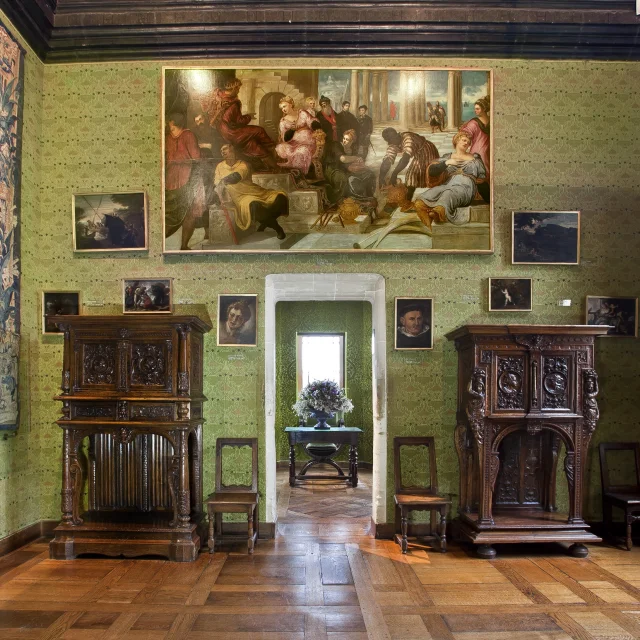
On the first floor, let yourself be dazzled by the splendour of the Galerie Médicis, a veritable museum displaying the finest treasures of the Château. Paintings by the great European masters of the 16th century tell the story of the place: a majestic Tintoretto dialogues with a portrait of a Venetian doge, while Murillo’s Virgin and Child watches over the collection.

In the bedroom of the Five Queens, the Renaissance furniture reveals all its refinement: the four-poster bed with finely carved woodwork sits alongside chests of precious marquetry.Flanders tapestries adorn the walls in shimmering hues, recounting the ancient myths that so fascinated the Valois court.

The reconstructed apothecary

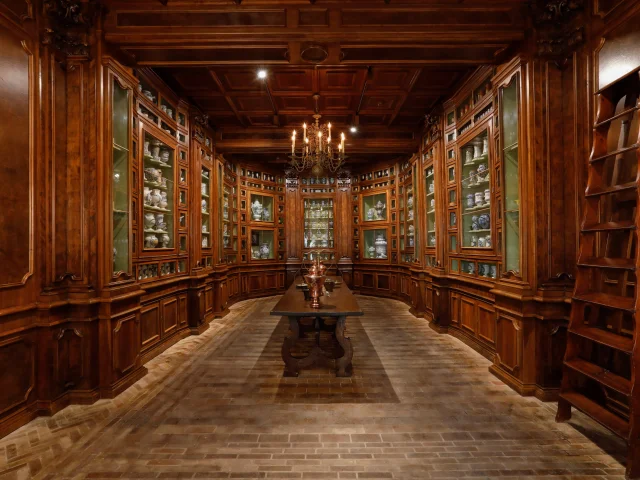
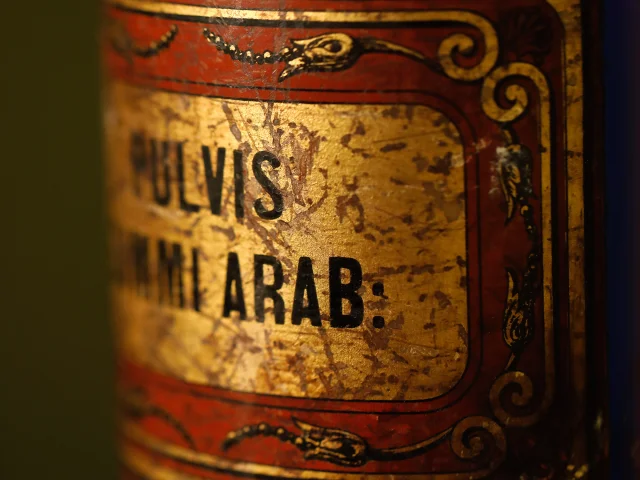
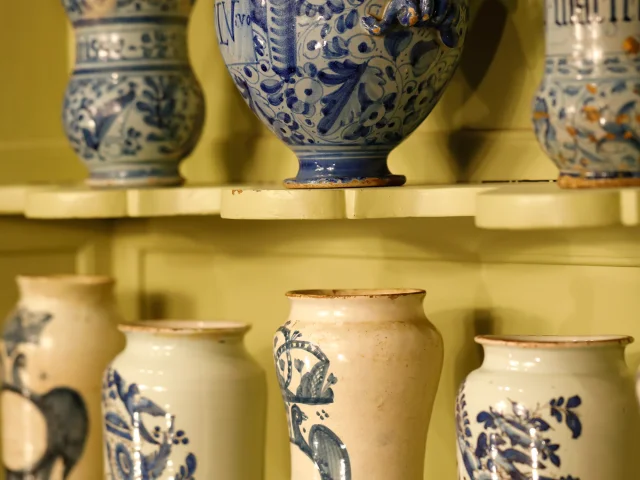
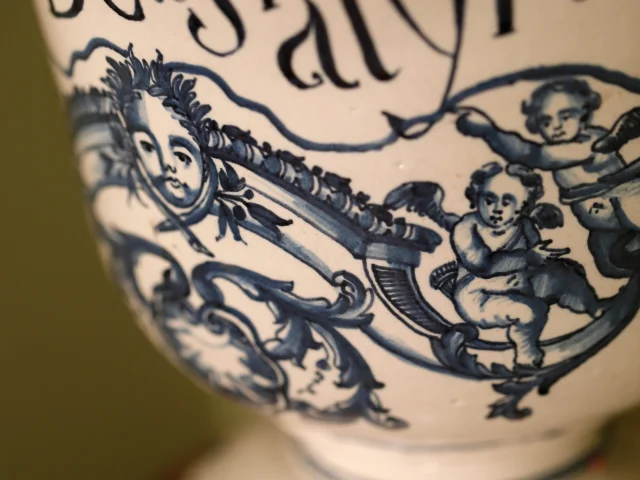
In the Domes building, a unique room transports you back to the 16th century. Nearly 300 apothecary jars, bronze mortars and precious herbariums line the burr walnut shelves. This meticulous reconstruction, the fruit of 14 months’ work by skilled cabinetmakers, brings to life the space where Catherine de Médicis used to prepare her remedies with the help of Nostradamus.
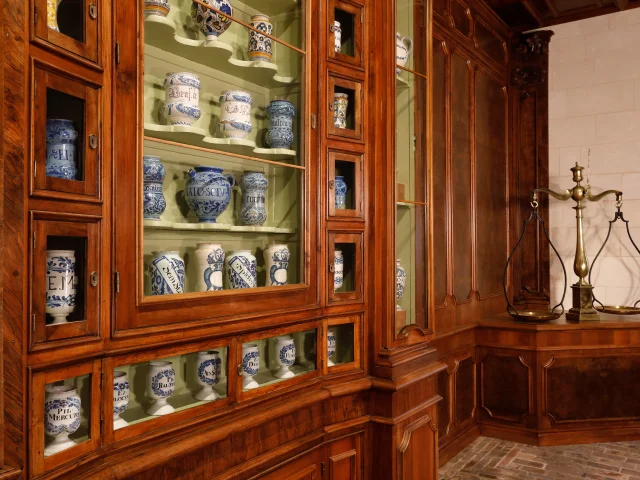
Blown-glass bottles and precision scales bear witness to the Queen’s interest in science and medicine. Smell the subtle aromas of the medicinal plants that still perfume this Renaissance dispensary, a veritable treasure trove of France’s pharmaceutical heritage.

More info